Welcome to follow FORSEE!
FORSEE is a Horizon Europe research project that defines what successful AI means for society. Instead of focusing only on technological and economic success, we explore how AI can serve diverse social needs, even when expectations conflict.
Our eight-partner consortium works to enhance the capabilities of the European AI industry, policymakers, and the public to address AI’s future risks and opportunities.
This is the second edition of our newsletter series, your gateway to updates on research results and perspectives in societally successful AI.
In this newsletter:
- A short update on the news from the field of AI, including the Digital Omnibus, Apply AI Strategy, and AI in Science Strategy
- Highlights from FORSEE workshops
- Upcoming events, survey and success reports
Don’t be a stranger: check out our website, follow us on LinkedIn and Bluesky, and subscribe to this newsletter!
News from the field of AI
Commission’s Digital Omnibus: deregulating personal data use and delaying AI Act implementation
This month, the European Commission unveiled its proposal for a new digital omnibus legislation. The simplification package introduces changes to the General Data Protection Regulation (GDPR) and delays the implementation of major parts of the AI Act.
If adopted, the reform would:
- Narrow the definition of personal data,
- Allow AI developers to use pseudonymized data without consent when citing “legitimate interest,” implying a GDPR exemption for AI training, and
- Delay enforcement of major provisions of the AI Act.
The Commission says these exemptions will boost innovation and save billions for businesses. Privacy lobbyists disagree. Max Schrems, founder of the Austrian privacy group noyb, said that the legislation would risk transforming the GDPR completely: “By creating AI-specific and pseudonym-based exceptions, [the simplification package] risks transforming the GDPR from a rights-based regime into a conditional compliance framework.”
The omnibus would also postpone implementation of key provisions of the AI Act, a change that Politico reports was lobbied for by the U.S. administration. The delay affects the provisions regulating “high-risk” AI systems, those deemed capable of serious harm to health, safety or fundamental rights, originally scheduled to kick in by August 2026.
The amendment would introduce a one-year grace period during which authorities cannot impose penalties, pushing enforcement to 2 August 2027. It would also excuse companies from listing certain AI tools in the EU’s high-risk database when the systems carry out narrow or procedural tasks.
The European Parliament’s reaction has been split. S&D, Renew and the Greens have criticised the draft as “extremely worrying.” Former Commissioner Thierry Breton warned decision-makers not to become “useful idiots,” suggesting the proposal has “transatlantic origins.”
Conversely, Piotr Müller (ECR, Poland) and others welcomed the deregulation push. According to Politico, President von der Leyen faces a dilemma: revise the proposal to appease centrist and left-wing groups, or lean on right-wing support to pass it.
The Commission launches Apply AI adoption strategy
In early October, the Commission launched its Apply AI Strategy, the adoption component of the AI Continent Action Plan released in April.
The strategy allocates €1 billion to support the uptake of AI tools across key industries, from manufacturing to healthcare, with a strong emphasis on the public sector. The budget also includes funding for institutional coordination and a new governance system, the Apply AI Alliance.
The strategy frames artificial intelligence as a crucial component of both economic and geopolitical agendas. Tech Commissioner Henna Virkkunen said that the strategy will help companies and key sectors “use AI to deliver real benefits for EU citizens, reinforce our competitiveness, and strengthen our technological sovereignty.”
The European Digital SME Alliance praised the focus on technological autonomy, calling the strategy “a real step forward”.
However, some critics note that because the €1 billion is sourced from the existing EU budget, it should be clearer what the goals of AI adaptation across the sectors – eleven in total – are. AI Now Institute argues the strategy is promoting AI adaptation without a clear sense of how AI will benefit society, or what trade-offs may be involved. They ask whether more targeted investments might be more efficient in reaching the strategy’s goal, while also directing funds toward addressing pressing societal challenges.
AI’s environmental impact remains unaddressed
An omission in the strategy is its lack of attention to AI’s environmental impact. In our response to the Apply AI Strategy, FORSEE researchers noted that large-scale AI models rely on energy-intensive infrastructures, such as data centres that consume substantial amounts of electricity, water, and other natural resources.
Current policy has not adequately addressed these issues. Existing measures are voluntary and rely on standardisation processes concerning the energy consumption of high-risk AI systems.
While the strategy promotes the adoption of AI within the climate and environment sector, it does not acknowledge AI’s own environmental footprint. Instead it frames technological efficiency as a pathway towards environmental sustainability, emphasising innovations such as weather forecasting systems.
However, FORSEE researchers among others have pointed out that greater efficiency in AI systems often leads to higher overall consumption of electricity and materials as the systems spread, rather than reduce environmental footprint.
FORSEE researchers argue that safeguarding environmental sustainability in AI requires:
- Full lifecycle accounting of environmental costs,
- Binding rules to prevent rebound effects,
- Clear political choices rather than market-driven self-regulation.
These issues remain unaddressed in the current strategy.
AI in Science Strategy aims for doubling Horizon Europe’s annual investments in AI
Alongside the Apply AI Strategy, the Commission published the European AI in Science Strategy at the beginning of October. The strategy introduces major additional funding for Horizon Europe AI-related investments – doubling the budget to €3 billion – alongside increased investment in computing capacity and a new flagship project supporting the use of AI in science.
FORSEE consortium members from ADAPT Centre at Trinity College Dublin argued in their submission to the strategy that there is an urgent need to accelerate policy development on ethical issues related to the use of AI in research. This includes responsible practices in academic writing, editing, data analysis, and literature reviews.
While the AI in Science Strategy provides important funding and collaboration opportunities, it offers few concrete answers to these ethical questions. Although the Commission acknowledges the need for clear ethical guidance for the responsible use of AI in science, the strategy mainly commits to updating existing instructions rather than accelerating policy and best practice development.
Updates from FORSEE
A fall filled with workshops and a survey
After summer holidays, the FORSEE team has been continuing research work, and convening a series of workshops in Berlin, Dublin, and Budapest to deepen conversations around the societal impacts of AI and to strengthen civil society engagement in AI governance.
Budapest workshop: how civil society frames the stakes of AI
In Budapest, civil society organisations (CSO), researchers, and advocates explored how different communities perceive the benefits and risks of AI. Discussions covered:
- Bias and discrimination
- Tensions between rapid AI deployment and democratic accountability, and
- The role of civil society in shaping the governance of high-risk AI systems.
Participants emphasised strategies such as awareness-raising and strategic litigation and committed to co-developing recommendations to inform EU policy frameworks like the AI Act and Digital Services Act.
Berlin workshop: how AI affects advocacy and vulnerable groups
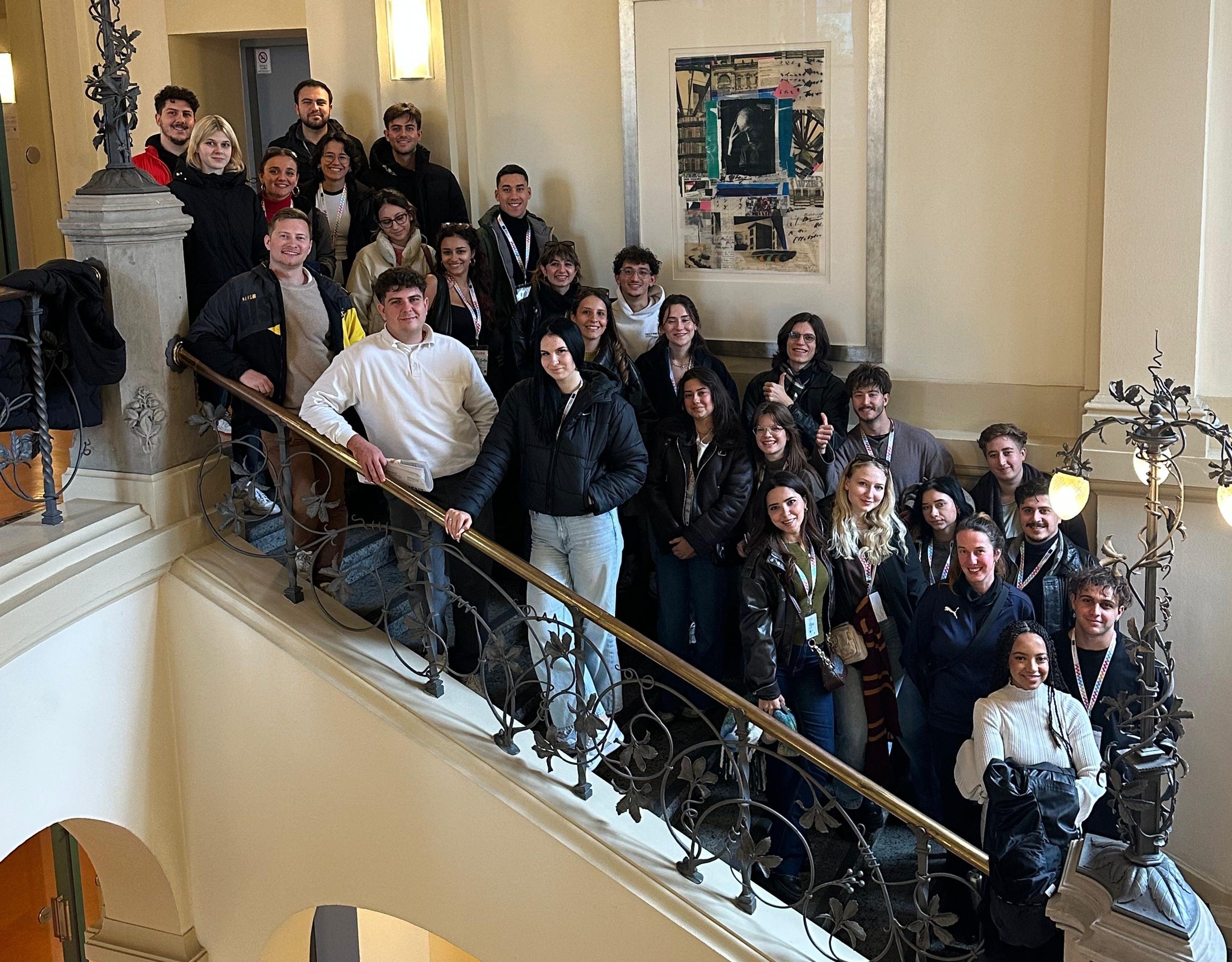
At WZB Berlin, stakeholders discussed how AI is reshaping advocacy work and affecting vulnerable groups. Case studies guided conversations on welfare automation, consumer discrimination, and the influence of AI-generated political narratives. Concerns ranged from power concentration to shrinking individual agency, but participants also saw opportunities to promote European values online, strengthen media literacy, and reclaim data from digital monopolies.
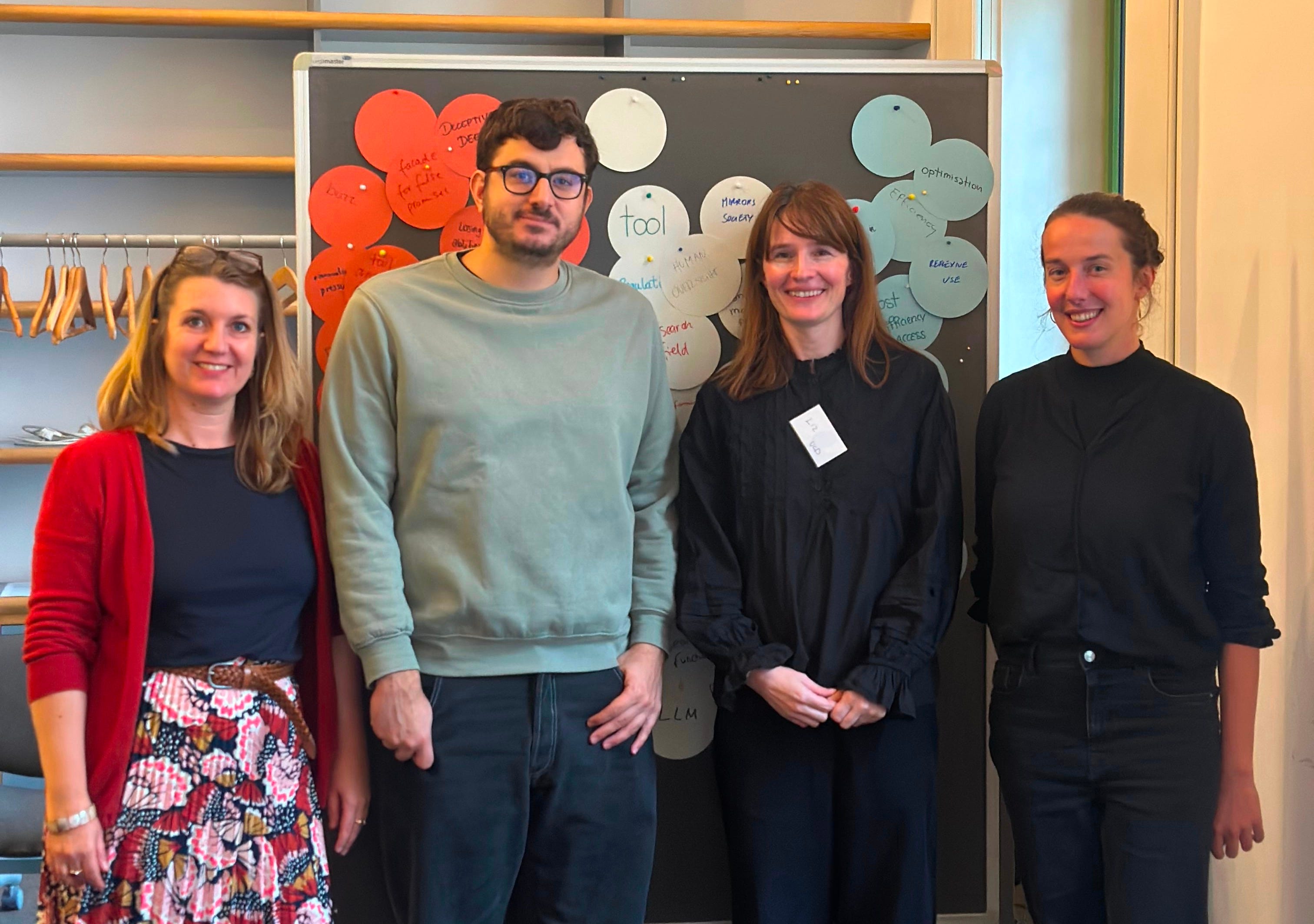
Dublin workshop: gender and LGBTQ+ concerns related to AI
In Dublin, civil society organisations and researchers focused on gender and LGBTQ+ concerns related to AI. Members of CSOs pointed to risks surrounding the relationship between AI and vulnerable communities, such as erasure of histories and perspectives and exposure of sensitive data. While the workshop session identified several factors limiting civil society’s effective engagement in responding to harmful AI systems, it also highlighted roles for CSOs in education, watchdog activity, and direct advocacy.
Erasmus+ workshop: political economy of AI with young changemakers
Finally, in a workshop with young changemakers at the Erasmus+ “NextGen AI Ambassadors” exchange, our WZB researcher led a session on the societal challenges of AI from a critical political economy perspective. Participants engaged enthusiastically with questions about what “AI” really means and how its societal impacts are unfolding in Europe.
Across all workshops, participants brought deep insight, curiosity, and lived experience helping advance a more ethical and inclusive AI future for Europe.
Survey for CSOs
To better understand differing experiences of AI systems, particularly among women, LGBTQ+ people, and gender-vulnerable groups, FORSEE has launched a 5–10 minute anonymous survey for civil society workers and members. If this is you, we would truly appreciate your answer!
Stay tuned for webinars, workshops, and success reports
Webinar: What is success in European AI?
Have you already signed up for our free webinar titled “What is success in European AI?” on December 3rd? If not, now is your chance to secure your spot and come hear from our expert speakers how we should redefine AI success in terms that go beyond narrow technical and economic definitions. The webinar is held in Zoom.
Workshop: Driving advantage with AI: Success factors for SMEs
If you are specifically interested in how European SMEs are putting AI to work to sharpen their competitive edge, be sure to take part in our free workshop “Driving Advantage with AI: Success Factors for SMEs”, held both online and in-person in Brussels on December 10. In this workshop, you will hear directly from business leaders as they share real experiences, lessons learned, and innovative approaches, and learn about the European resources and networks helping them succeed. Please note that in-person attendance is limited, so don’t hesitate to register!
Success Reports: What do we mean by AI success?
In February, we will be excited to share our first success reports! These publications will examine what “success” in AI looks like from the perspectives of a wide range of actors, including SMEs, supranational institutions, standardisation bodies, civil society organisations, professional associations, and trade unions. The reports will also delve into the media landscape and the legal challenges that shape how AI success is defined and achieved.