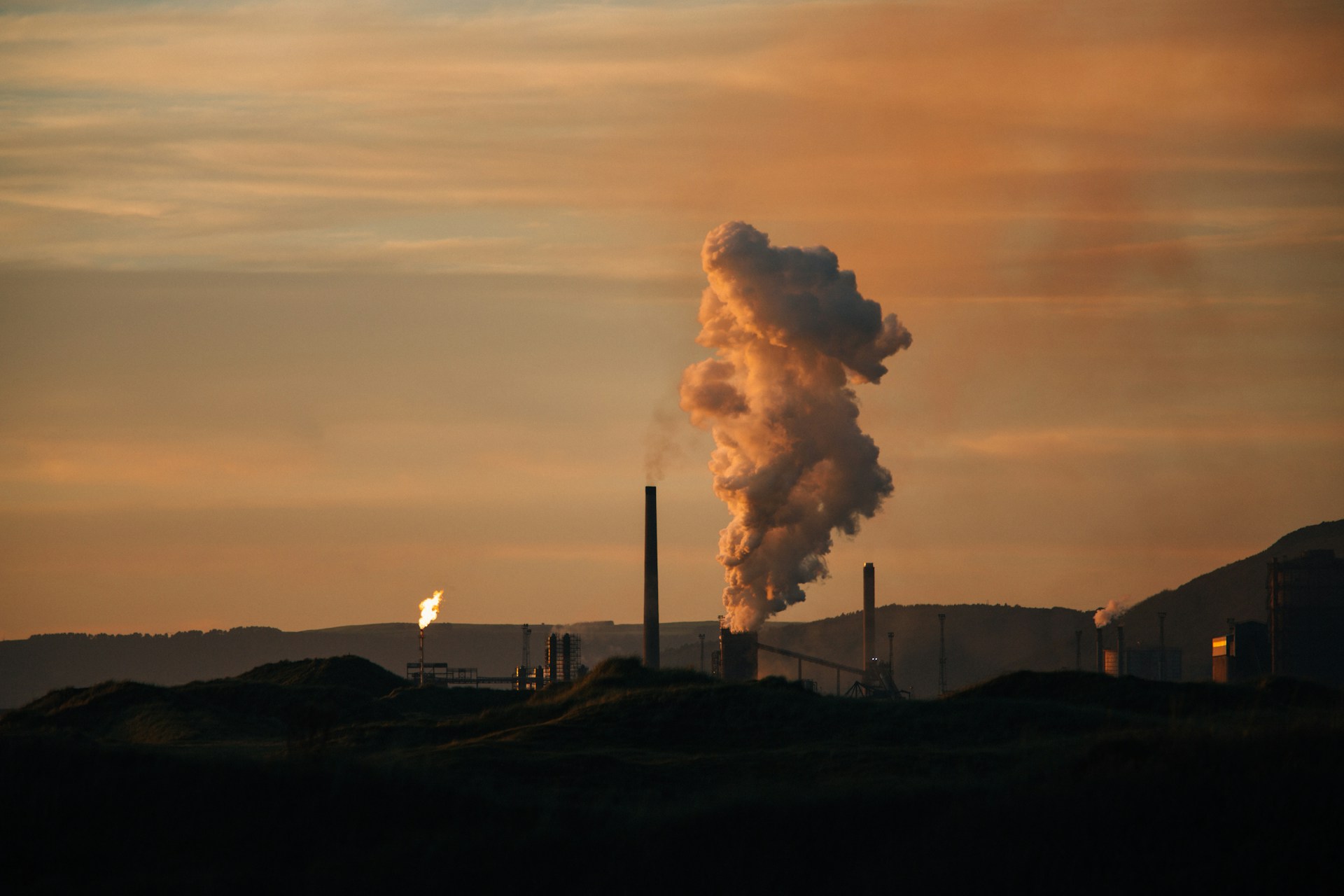
Photo by Mike Erskine on Unsplash.
As Europe moves toward greater AI sovereignty, defining what the societal success of artificial intelligence means has never been more crucial. Our December webinar, “What is success in European AI?”, set out to discuss just that.
Our panelists, representing EU institutions, civil society, and the AI industry, offered insight into the complexities of implementing, deploying, and governing AI. Throughout the discussion, a tension emerged: is the European Union’s pursuit of AI “success”, often framed through economic competitiveness and global AI race, in conflict with its core values of human-centricity and sustainability? What followed was a reflection on a policy landscape that is still finding its moral compass.
This blog, written by Patrick Brodie, Assistant Professor from the UCD Centre for Digital Policy, is part of a three-part series on statements about AI success. FORSEE researchers presented these statements during the webinar to provoke discussion about what success in AI means. You can read the other two here and here.

Unpacking the material realities of AI and global supply chains
AI, like the cloud, is not immaterial: From energy-hungry data centres to resource-intensive model training, AI depends on physical infrastructures that consume vast amounts of electricity, water, and raw materials. Despite the European Union’s ambitions for trustworthy and sustainable AI, its current policy and regulatory frameworks, including the AI Act, largely overlook these material realities. Addressing this requires assessing the global supply chain of AI and the contradictions of a “twin transition” which counts on AI to help solve our problems before it has shown any meaningful progress in alleviating them.
We cannot address these material impacts without understanding how they are a consequence of business models built on expansion. In the AI Act, AI is treated as separate from the materials and infrastructures that make it possible. Chips are manufactured in foundries, largely in Taiwan, and the designs are owned and managed by US companies – including NVIDIA, the most valuable company in the world. The raw materials used to manufacture these chips are extracted across vast supply chains, mostly from territories in the global south. The cloud infrastructures on which most AI systems in the market run are owned and operated by US tech multinationals. AWS, Google, and Microsoft, between the three of them, control over 60% of global cloud market share. It is increasingly recognised that these companies are also ultimately in control of AI growth, and are influencing the policy commitments of the EU – just a couple of weeks ago, it was widely reported that the AI Act would be watered down due to pressure from the US and big tech.
Ireland’s AI ambitions constrained by infrastructure: A cautionary tale
Nonetheless, data centres, cloud systems, and supply chains remain outside the core of AI policies, even though they are fundamental to its operation. Alongside direct AI policy, we have the other enabling policy mechanisms of the “twin transition” – the EU Critical Raw Materials Act, the EU Chips Act, as well as industrial policy which heralds the inextricable pairing of digitalisation and decarbonisation. The green, digital transition, in EU copy, is underway. But Ireland offers us a glimpse into what that looks like in practice, from an economy that is almost recklessly dependent on US capital. In 2024, Ireland’s corporation tax revenues rose to €28 billion. 75% of that came from US multinationals. This accounted for 29% of all tax revenue, up from 11% in 2014. It’s no coincidence that since 2015, data centres’ share of Ireland’s electricity demand has also risen by 440%. Primarily driven by the big tech hyperscalers, they now utilise 22% of Ireland’s total electricity, an astronomical number that has no national global comparison – yet. That number is 50% in Dublin and Meath. While there is a de facto moratorium on new grid connections, the Government continues to jump through hoops to make room for data centres.
What happens in such a cauldron of constrained, dependent economic development? Our solutions are dictated by and for multinational tech companies: the potential for vast eco-energy parks in rural Ireland, as they are called, with energy infrastructure built across public land assets directly by and for tech companies investing infrastructurally in their AI growth, substitute for a just transition. In Dublin, AWS will provide heat to communities, and to provide more energy for data centres which produce this heat, we must enable greater fossil gas supply via investment in LNG terminals and power plants to burn US fracked gas – never mind what this locks Ireland into from climate and infrastructure perspectives. According to Eric Schmidt, former CEO of Google, we have to bet on AI to solve the climate problem anyways. To decarbonise, we apparently have to let the US technology companies run their course.
This attitude embeds not only techno-solutionism into the strategies by which we are meant to resolve the climate crisis at a societal level, but at a more surface level, it also shows that the EU’s AI goals become structurally dependent on US companies and their technological “solutions” to environmental harms if this is the core infrastructural enabler of the twin transition. Technological fixes to systemic environmental harms cannot be the path forward if we are committed to the EU’s climate and industrialisation aims in the context of the twin transition.
The EU must impose systemic controls on monopolistic tech companies
The environmental implications of US monopolies must thus be treated as a systemic dimension of AI development. The excessive resource use and privatisation of social good is a function, not a bug, of the way that these companies operate. Not embedding a fully socialised public and environmental good as a core parameter of assessment of AI systems assessed across their full lifecycle, from data collection and model training to deployment, leaves us at the unjust and undemocratic behest of monopolistic tech companies. Addressing sustainability outcomes in the first instance will, with certainty, require applying serious systemic controls and limitations on multinational tech companies providing the core technologies and infrastructures, which may constrain “growth.” This is a trade-off that is essential for addressing sustainability impacts as well as other factors, such as industrial sovereignty within the EU’s member states.
Sustainable AI should be a binding principle in how Europe governs, funds, and evaluates technological innovation. Sustainable AI is not possible without meaningfully embedding strict limitations on US tech monopolies across all AI policy.