Only two weeks left until the webinar on European AI success! To build excitement, we’re introducing the exceptional lineup we’ve brought together for this timely discussion.
As Europe moves toward greater AI sovereignty, defining what societal success means has never been more crucial. Our panelists, representing EU institutions, civil society, and the AI industry, bring the insight needed to explore this question from multiple angles.
Who will be there?
Followed by opening remarks from Malgorzata Nikowska, Head of Unit for Artificial Intelligence Innovation and Policy Coordination at AI Office of the DG CNECT, you will hear from these experts:
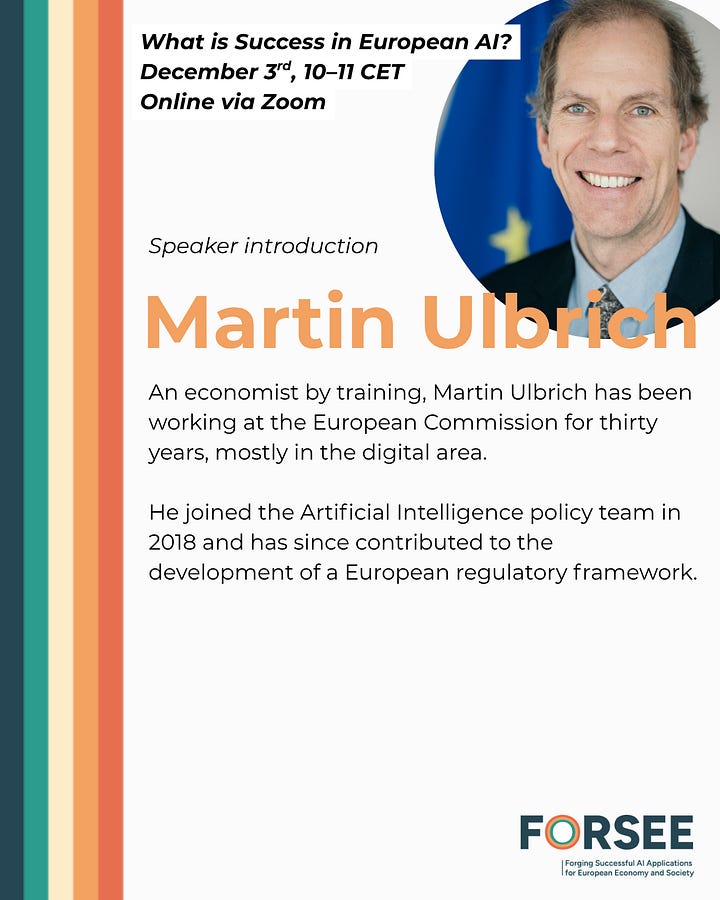
🔶 Martin Ulrich, Policy Officer @ European Commission
An economist by training, Martin Ulbrich has been working at the European Commission for thirty years, mostly in the digital area. He joined the Artificial Intelligence policy team in 2018 and has since contributed to the development of a European regulatory framework.
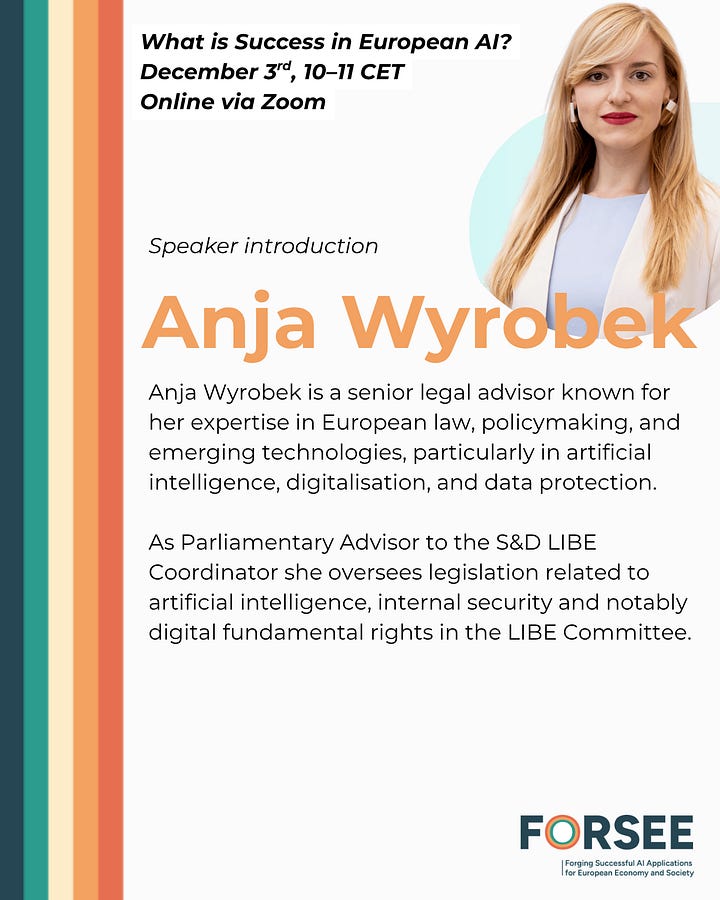
🔶 Anja Wyrobek, Parliamentary Assistant @ European Parliament
Anja Wyrobek is a senior legal advisor known for her expertise in European law, policymaking, and emerging technologies, particularly in artificial intelligence, digitalisation, and data protection. As Parliamentary Advisor to the S&D LIBE Coordinator she oversees legislation related to artificial intelligence, internal security and notably digital fundamental rights in the LIBE Committee.
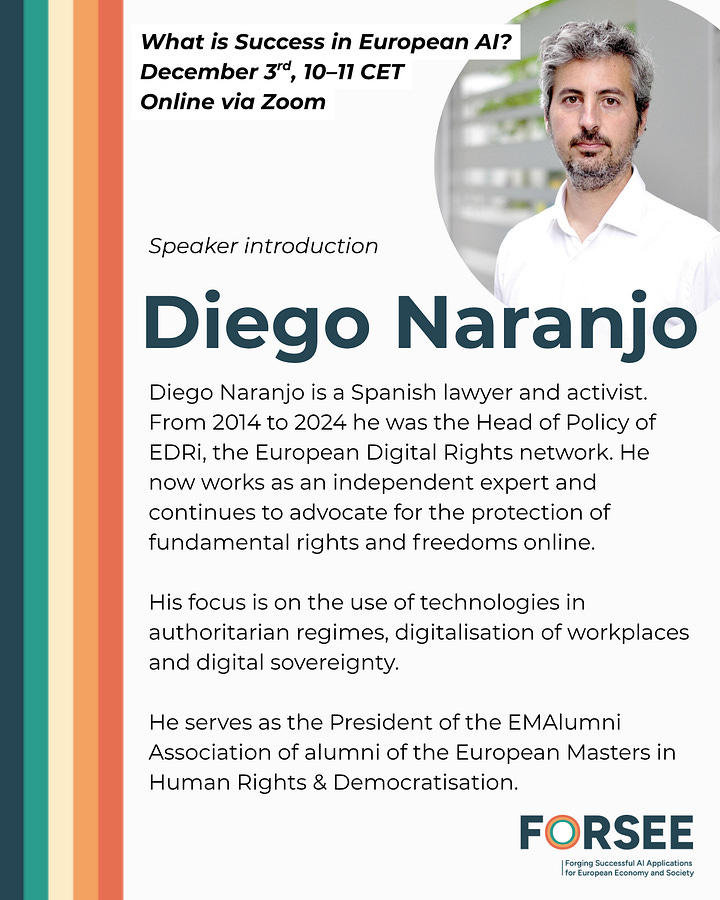
🔶 Diego Naranjo, Digital rights consultant
Diego Naranjo is a Spanish lawyer and activist. From 2014 to 2024 he was the Head of Policy of the European Digital Rights network (EDRi). He now works as an independent expert and continues to advocate for the protection of fundamental rights and freedoms online. His focus is on the use of technologies in authoritarian regimes, digitalisation of workplaces and digital sovereignty. He serves as the President of the EMAlumni Association of alumni of the European Masters in Human Rights & Democratisation.
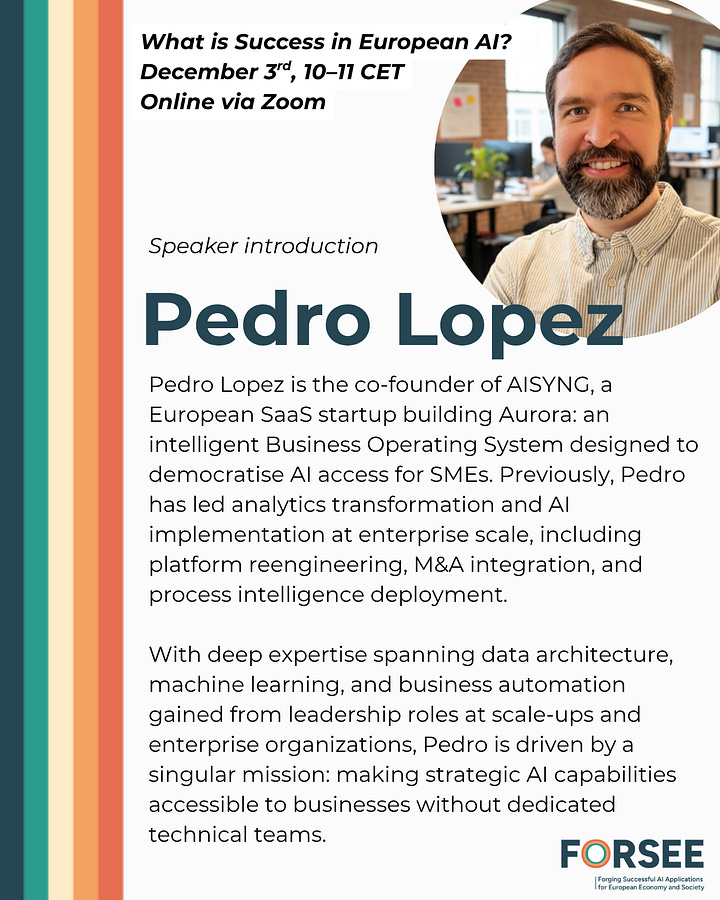
🔶 Pedro Lopez, Co-founder @ AISYNG
Pedro Lopez is the co-founder of AISYNG, a European SaaS startup building an intelligent Business Operating System designed to democratise AI access for SMEs. Previously, Pedro has led analytics transformation and AI implementation at enterprise scale, including platform reengineering, M&A integration, and process intelligence deployment. With deep expertise spanning data architecture, machine learning, and business automation gained from leadership roles at scale-ups and enterprise organisations, Pedro is now driven by a singular mission: making strategic AI capabilities accessible to businesses without dedicated technical teams. He believes Europe’s AI success should be measured not just by frontier model development, but by how effectively we deploy AI to empower the 99% of businesses that form the backbone of our economy.
The panel discussion is complemented with video commentary from Brando Benifei, Member of the European Parliament, Group of the Progressive Alliance of Socialists and Democrats.
How to participate?
This webinar is designed for everyone shaping or studying AI in Europe, including policymakers, researchers, SMEs, and anyone invested in responsible and sustainable AI. Read more about the event here!
Register now and join the conversation about Europe’s AI future!